Women's Hormone Health Darrell Wilcox Women's Hormone Health Darrell Wilcox

Oral Estradiol and Breast Cancer Risk: What the Evidence Actually Says — and Why the Myth Persists

If you've been told oral estrogen is too dangerous, you deserve to know what the evidence actually says. The study most commonly cited to justify that fear showed estrogen alone reduced breast cancer risk by 23%. Here's what the research shows — and why it matters.

A patient came to me recently after being denied hormone therapy by two other physicians. She was 54, a year and a half past her last period, and managing a symptom burden that had quietly dismantled her quality of life — poor sleep, cognitive fog, joint pain, worsening lipids on her annual labs, and a libido she described as "gone." Both doctors had told her the same thing: oral estrogen is too risky. One had mentioned breast cancer. The other had mentioned blood clots. Neither had offered an alternative.

What neither physician had done was examine the evidence behind those warnings — specifically, which estrogen was studied, in which patients, with which additional hormones, and whether those findings could be legitimately applied to the bioidentical estradiol she was asking about.

They could not. And the failure to make that distinction is causing real harm to real patients.

This post is a direct examination of the evidence. It is longer than most of what I publish, because the science deserves more than a summary. If you have been told you cannot take oral estrogen, or that it is too dangerous, I want you to understand exactly what the studies found — and what they did not.

 The Word ‘Estrogen’ Does Not Mean What Most People Think

Before examining a single study, we need to establish something foundational. When a research paper, a clinical guideline, or a news headline warns that “estrogen” increases the risk of breast cancer, heart attack, or blood clots, there is one question you must ask before accepting that conclusion:

Which estrogen?

For decades, the dominant form of hormone therapy prescribed in the United States was Premarin — a brand of conjugated equine estrogen (CEE) derived from the urine of pregnant mares. CEE is not a single hormone. It is a complex mixture of multiple conjugated estrogens, many of which do not exist naturally in the human body and interact with estrogen receptors in ways that native human estradiol does not.

The landmark studies that shaped our understanding of hormone therapy risk — including the Women’s Health Initiative, the HERS trial, and numerous large observational cohorts — used CEE, not bioidentical estradiol. Yet their findings were applied broadly to all estrogen, as though Premarin and bioidentical 17β-estradiol were interchangeable compounds.

They are not. They are fundamentally different molecules with different receptor interactions and — as the evidence now clearly shows — different risk profiles.

What the Women’s Health Initiative Actually Found

The WHI is the study most commonly cited when patients express fear about hormone therapy and breast cancer. It is also one of the most widely misread studies in modern medicine.

The WHI had two arms: one testing CEE combined with the synthetic progestin medroxyprogesterone acetate (MPA, sold as Provera), and one testing CEE alone in women who had undergone hysterectomy. Here is what is almost never discussed:

The CEE-alone arm — estrogen without any progestin — showed a statistically significant reduction in breast cancer incidence. Women taking CEE alone had a 23% lower rate of invasive breast cancer compared to placebo, with a hazard ratio of 0.77 (p=0.02). Fewer women in the estrogen group also died from breast cancer.

The breast cancer signal in the WHI came from the combined arm: CEE plus MPA. It was the synthetic progestin medroxyprogesterone acetate that drove the increased risk. Not the estrogen.

The study most commonly cited to justify fear of estrogen and breast cancer actually showed that estrogen alone reduced breast cancer incidence by 23%. The culprit was the synthetic progestin, not the estrogen.

This distinction matters enormously, because at Precision Hormone Consulting we do not prescribe synthetic progestins. We use bioidentical micronized progesterone — and the evidence on that distinction is equally clear.

Bioidentical Progesterone vs. Synthetic Progestins: A Clinically Meaningful Difference

The large French E3N cohort study — following tens of thousands of women over years — found that women using estradiol combined with synthetic progestins had a significantly elevated breast cancer risk. Women using estradiol combined with bioidentical micronized progesterone had essentially the same breast cancer risk as women who took no hormones at all.

A population-based case-control study of over 43,000 breast cancer cases confirmed this: micronized progesterone carried an odds ratio of 0.99 for breast cancer — statistically indistinguishable from no effect — while synthetic progestins carried an odds ratio of 1.28. A systematic review and meta-analysis reached the same conclusion: bioidentical progesterone is associated with lower breast cancer risk than synthetic progestins when combined with estrogen.

The human body has progesterone receptors that are designed to respond to progesterone — not to the structurally distinct synthetic molecules that were engineered to survive oral delivery in an earlier era of pharmacology. The difference is not a marketing claim. It is a physiological one, reflected consistently in the clinical data.

The Cardiovascular Case for Oral Bioidentical Estradiol

Now to the reason I often prefer oral bioidentical estradiol for patients with unfavorable lipid profiles: its first-pass hepatic effect. When estradiol is taken orally, it passes through the liver before entering systemic circulation. This produces a well-documented and clinically meaningful set of lipid changes that transdermal delivery simply does not replicate.

Oral estradiol reduces LDL cholesterol by approximately 14–15% through accelerated LDL catabolism in the liver. It increases HDL cholesterol by approximately 15–16%, primarily through an increase in the cardioprotective HDL2 subfraction. Transdermal estradiol, because it bypasses hepatic first-pass metabolism, has no significant effect on lipoprotein levels.

For a patient already managing elevated LDL and low HDL — both cardiovascular risk factors — oral estradiol functions as a meaningful metabolic intervention in addition to addressing menopausal symptoms. This is a benefit that does not exist with patches or creams.

But the cardiovascular story does not stop at lipids. It extends to hard clinical outcomes.

What the Randomized Trials Show

The ELITE trial, a randomized double-blind placebo-controlled study published in the New England Journal of Medicine in 2016, enrolled 643 healthy postmenopausal women and found that oral 17β-estradiol, initiated within six years of menopause, produced a statistically significant slowing of subclinical atherosclerosis progression — measured by carotid artery intima-media thickness — compared to placebo. Arterial wall thickness increased at nearly half the rate in the estradiol group.

The Danish Osteoporosis Prevention Study (DOPS), published in the BMJ in 2012, followed 1,006 healthy women for up to 16 years using bioidentical estradiol and found a 52% reduction in the composite endpoint of death, myocardial infarction, and hospitalization for heart failure — with no increase in cancer, stroke, or venous thromboembolism. This was a randomized controlled trial. The effect size is not subtle.

A Finnish nationwide registry tracking nearly 490,000 women on estradiol-based therapy over more than a decade confirmed significant reductions in coronary heart disease mortality at the population level. That same data revealed something striking about what happens when estradiol is stopped: cardiac mortality risk rose meaningfully within the first year after discontinuation — itself evidence of the protective effect the hormone was providing.

The Comparison Conventional Medicine Hasn’t Made

Here is where things become uncomfortable for conventional practice, and where I think the evidence demands a direct conversation.

Statins are the default cardiovascular prevention tool for postmenopausal women. They are prescribed routinely, often without extended discussion, and their risk-benefit profile is rarely questioned in the same way that hormone therapy is. But the American Heart Association’s own 2020 scientific statement on menopause and cardiovascular disease acknowledged directly that evidence supporting statistically significant reductions in cardiovascular events and all-cause mortality for primary prevention — in women without established cardiovascular disease — is lacking for statins. Multiple large trials have consistently failed to show statistically significant reductions in hard cardiovascular outcomes in women who have not yet had a heart attack or stroke.

To be precise: statins have established benefit for secondary prevention in women with existing cardiovascular disease. That evidence is solid and I am not disputing it. But for primary prevention — protecting the woman who has not yet had a cardiac event — the RCT evidence of benefit is inconsistent and, in several major trials, absent.

Now set that beside what oral bioidentical estradiol has demonstrated in that same population: a 52% reduction in death, MI, and heart failure in a randomized trial; a statistically significant slowing of subclinical atherosclerosis in a NEJM-published RCT; significantly reduced coronary mortality across nearly half a million women in a nationwide registry; and meaningful HDL elevation and LDL reduction through a mechanism statins do not replicate.

The drug that has been feared and restricted is outperforming the drug we routinely prescribe — in exactly the population where the conventional evidence gap is most glaring. That conversation is overdue.

This is not an anti-statin argument. It is an argument for intellectual honesty about what the evidence actually shows for each intervention, in each population, for each outcome. When a patient asks me whether she should be taking a statin for primary prevention, I want her to have the full picture. Oral bioidentical estradiol is part of that picture.

Why the WHI’s Cardiovascular Risks Don’t Apply to Bioidentical Estradiol

One additional concern deserves direct address: some of the WHI’s cardiovascular signals — particularly the increased risk seen in older women with established atherosclerosis — have been attributed in part to CEE’s effect on matrix metalloproteinase-9 (MMP-9), an enzyme involved in atherosclerotic plaque destabilization. Oral CEE therapy significantly elevates circulating MMP-9 and C-reactive protein, which may explain the cardiovascular events observed in high-risk women enrolled late after menopause.

This MMP-9 elevation is a CEE-specific finding. Studies comparing oral CEE to transdermal estradiol show that transdermal estradiol does not produce the same inflammatory changes. There is no comparable evidence that oral bioidentical estradiol drives MMP-9 to clinically dangerous levels — which is consistent with the DOPS trial, where bioidentical estradiol did not increase cardiovascular events.

Similarly, research directly comparing the hemostatic profiles of oral CEE versus oral bioidentical estradiol found that CEE users had a measurably more prothrombotic clotting profile than estradiol users. The VTE risk signal associated with oral estrogen as a class derives predominantly from CEE data. For women without a personal history of thrombophilia or prior VTE, the VTE concern from oral bioidentical estradiol remains theoretical rather than proven in randomized trial data.

The cardiovascular and clotting risks observed in the older hormone therapy literature were generated by studies of CEE. They cannot be legitimately applied to a different compound.

What This Looks Like in Practice

The patient I described at the opening — 54, symptomatic, with worsening lipids and two prior refusals — started oral bioidentical estradiol and micronized progesterone at our practice. At her three-month follow-up, her LDL had dropped meaningfully, her HDL had improved, her sleep had normalized, and the cognitive fog she’d been managing for over a year had largely resolved. She told me she felt like herself again for the first time since before perimenopause.

None of that is remarkable to me clinically — it is what the evidence predicts. What is remarkable is that she had been refused treatment twice based on a risk narrative that did not apply to her, the hormones she was asking about, or the evidence she deserved to have.

Every patient’s risk profile is individual. Oral estradiol is not the right choice for every woman. For patients with known thrombophilia, active VTE history, severe hypertriglyceridemia, or established cardiovascular disease, transdermal delivery may be the more appropriate route — and we have that conversation explicitly. But route-of-administration decisions should be grounded in a patient’s actual clinical picture, not a decades-old misreading of a study that tested a fundamentally different hormone.

The Bottom Line

The fear that oral estradiol causes breast cancer has no foundation in the evidence as applied to bioidentical hormones. The WHI — the study most often cited — showed that estrogen alone reduced breast cancer risk by 23%. The breast cancer signal in combined therapy was driven by synthetic progestins, not estrogen. Bioidentical micronized progesterone carries a neutral breast cancer risk profile. And oral bioidentical estradiol has demonstrated cardiovascular benefits that the primary prevention statin literature, in women, has not.

Women deserve care grounded in the actual evidence — not in a reflexive application of findings that were generated by different compounds, in different populations, decades ago. If you have been told that oral estrogen is too risky, or that your symptoms are something you simply have to manage, I would encourage you to seek a more complete conversation. The evidence supports one.

Start the Conversation

If any of this resonates with your own experience — symptoms that have been dismissed, risks that were overstated, options that were never offered — I invite you to schedule a free consultation with Precision Hormone Consulting. We see patients virtually across Texas, and in person at our clinic locations. A consultation is a conversation, not a commitment. It is simply an opportunity to review your full picture with a physician who takes the evidence seriously.

Book your free consultation online, or call the clinic to schedule in person.

This content is for educational purposes only and does not constitute medical advice. Hormone therapy decisions should be made in consultation with a qualified physician based on your individual health history, risk factors, and clinical presentation. The studies referenced are summarized for lay audiences; readers seeking full methodology and statistical detail are encouraged to consult the primary sources. Dr. Darrell Wilcox is the Medical Director of Precision Hormone Consulting and holds an Advanced BHRT certification through WorldLink Medical.

Read More
Men’s Hormone Health Darrell Wilcox Men’s Hormone Health Darrell Wilcox

Anastrozole in Men on TRT: What It Does, When It Helps, and When It Doesn’t

Many men on testosterone therapy are prescribed anastrozole as a matter of routine. But blanket estrogen suppression often creates the very problems it’s meant to fix—including, paradoxically, the gynecomastia it was supposed to prevent.
You started testosterone therapy hoping to feel sharper, stronger, and more like yourself. But a few weeks in, your doctor added another prescription to the mix—anastrozole—with a brief explanation about estrogen. Maybe your levels came back elevated. Maybe it was just standard protocol.

If you’ve ever wondered what anastrozole is actually doing, whether you need it, and what happens when it’s used too aggressively, this post is for you. The answers might surprise you—especially the part about gynecomastia.

Why Estrogen Matters in Men

Estrogen is not a female hormone. It’s a steroid hormone that men produce, require, and depend on for basic physiological function. In men, the primary form is estradiol (E2), produced largely through a conversion process called aromatization—testosterone is converted to estradiol by an enzyme called aromatase. More than 80% of circulating estradiol in men comes from this peripheral conversion.

Estradiol does a remarkable amount of work in the male body. It plays a central role in bone density, cardiovascular health, lipid regulation, cognition, mood, sleep quality, and libido. Estradiol is now understood to be the dominant regulator of bone resorption in men—not testosterone. Men with very low estradiol develop osteoporosis. Men with suppressed estradiol on TRT often report joint pain, low libido, depression, and brain fog—the same symptoms they were trying to fix with testosterone in the first place.

The problem isn’t estrogen itself. It’s estradiol that falls too low when aromatase is over-suppressed, or rises too high relative to testosterone. That balance—not any single number in isolation—is what matters clinically.

Estradiol isn’t the enemy on TRT. The relationship between testosterone and estradiol matters far more than either number read in isolation.

What Anastrozole Actually Does

Anastrozole is an aromatase inhibitor (AI). It blocks aromatase, the enzyme responsible for converting testosterone to estradiol. When aromatase activity is suppressed, less testosterone converts—and circulating estradiol drops.

It is FDA-approved for breast cancer treatment and prevention in postmenopausal women. Its use in men on TRT is entirely off-label, meaning it’s prescribed based on clinical reasoning rather than a specific indication in the drug’s labeling. That doesn’t make it inappropriate—off-label prescribing is standard in hormone medicine—but it does mean the prescriber bears responsibility for the clinical judgment behind each prescription.

Anastrozole is typically prescribed as a low-dose oral tablet in the TRT context, often 0.25 mg to 0.5 mg taken two to three times per week. The goal isn’t to eliminate estradiol. The goal is to keep testosterone and estradiol in a healthy relationship to each other—and that relationship looks different depending on where your testosterone level is optimized.

The Evidence on Estradiol and Sexual Function

One of the most important studies in this area was published in the New England Journal of Medicine in 2013. Finkelstein and colleagues enrolled 400 healthy men, suppressed their endogenous testosterone and estradiol, then randomized them to receive varying doses of testosterone—with or without an aromatase inhibitor to block estradiol conversion.

When estradiol was suppressed alongside testosterone, sexual function declined significantly—even in men who had adequate testosterone levels. Sexual desire and erectile function tracked with estradiol, not with testosterone alone. The conclusion was direct: estradiol plays an independent and essential role in male sexual function. A separate retrospective study further found that the estradiol-to-testosterone ratio independently predicted erectile function after controlling for other variables—reinforcing that the balance between these two hormones matters more than either value in isolation.

This matters directly for how anastrozole is used in practice. If an aromatase inhibitor is suppressing estradiol below the functional range, sexual function often declines—not improves. The drug intended to optimize TRT may be neutralizing its most meaningful benefit.

Why a Fixed Estradiol Target Misses the Point

For years, many TRT protocols aimed to keep estradiol within a fixed absolute range—often somewhere in the 20–40 pg/mL band. That target was derived from population reference ranges built around average men with average testosterone levels. It doesn’t hold when testosterone is optimized significantly higher.

The more clinically meaningful tool is the testosterone-to-estradiol ratio, or T:E2, calculated by dividing total testosterone in ng/dL by estradiol in pg/mL. Importantly, this ratio has two meaningful edges—a floor and a ceiling—and clinical problems arise at either end. A 2025 comprehensive review examining T:E2 data across multiple large population studies described a beneficial range of approximately 10 to 30. Below 10, estradiol is high relative to testosterone and estrogen-dominant symptoms—water retention, gynecomastia, reduced libido—become more likely. Above 30, estradiol is insufficient relative to testosterone and the low-estradiol picture emerges: joint pain, brain fog, poor sleep, reduced bone protection, and impaired sexual function.

A study in men with hypogonadotropic hypogonadism established a T:E2 ratio of 12 as a clinically meaningful lower threshold, below which erectile function was significantly impaired. But the lower bound only tells part of the story. A man with testosterone of 1,000 ng/dL and estradiol of 1 pg/mL has a T:E2 of 1,000—technically above that threshold, but clearly estradiol-deficient and symptomatic. The ratio only functions as a useful clinical tool when both edges of the range are respected.

Consider the math in an optimized TRT context: if testosterone is 2,000 ng/dL and estradiol is 20 pg/mL, the T:E2 ratio is 100—well above the upper bound of 30. That isn’t controlled estrogen; it’s estrogen deficiency in a high-androgen environment. The same estradiol of 20 pg/mL in a man with testosterone of 400 ng/dL produces a T:E2 of 20, which falls comfortably within the healthy range. Same estradiol number, opposite clinical meaning. This is why fixed absolute targets fail men on optimized TRT.

The T:E2 ratio has a floor and a ceiling. Most over-suppression errors on TRT are violations of the upper bound—not the lower one.

The Gynecomastia Paradox: How Suppressing Estrogen Can Cause What You’re Trying to Prevent

One of the most common reasons anastrozole is added to a TRT protocol is fear of gynecomastia—the development of glandular breast tissue in men. That concern is clinically legitimate. When estradiol rises significantly relative to testosterone, it can stimulate ductal proliferation in breast tissue, and no man starting TRT wants that outcome.

The clinical irony is that overly aggressive aromatase inhibition can promote both forms of breast enlargement men want to avoid—through a two-step pathway that runs through insulin resistance, ectopic fat deposition, and local aromatase activity in breast tissue.

Step One: Anastrozole, Insulin Resistance, and Ectopic Fat Redistribution

A double-blind randomized crossover study in healthy men found that six weeks of anastrozole therapy produced a statistically significant reduction in insulin sensitivity, measured by hyperinsulinemic-euglycemic clamp. The authors concluded that local estrogen production in skeletal muscle plays an important role in peripheral insulin sensitivity, and that aromatase inhibition disrupts this. The same study noted a reduction in leptin and raised the possibility of a shift from subcutaneous toward visceral fat deposition.

This is consistent with the Finkelstein 2013 New England Journal of Medicine data showing that estradiol—not testosterone—is the primary regulator of fat mass in men. When estradiol was suppressed in that trial, fat accumulation increased regardless of testosterone level.

When insulin resistance drives fat redistribution toward visceral and ectopic depots—including the chest wall and breast region—the result is pseudogynecomastia: breast enlargement from fat deposition rather than glandular proliferation. This is clinically distinct from true gynecomastia, produces the same unwanted cosmetic outcome, and does not respond to further anastrozole use.

Step Two: Ectopic Breast Fat as a Local Aromatase Source

Breast adipose tissue is not metabolically inert. It contains active aromatase and converts androgens to estrogens locally, generating an estrogen-rich microenvironment within breast tissue itself—independent of what circulating estradiol levels show on a blood draw.

The clinical literature on gynecomastia in obese men documents this pathway explicitly. Increased aromatase activity in adipose tissue, combined with leptin’s capacity to stimulate aromatase in breast tissue and directly promote epithelial cell growth, is recognized as a contributor to true glandular gynecomastia in overweight and obese men—not just pseudogynecomastia.

So the paradox closes: anastrozole prescribed to prevent gynecomastia promotes insulin resistance and ectopic fat redistribution toward the breast region—producing pseudogynecomastia—and that accumulated breast adipose tissue then becomes a local estradiol source capable of driving true glandular proliferation. The AI blocks circulating aromatase while inadvertently creating a new local aromatase depot in exactly the tissue it was meant to protect.

To be clear about the evidence: each mechanistic link in this sequence is supported by peer-reviewed data. The complete pathway from anastrozole use to glandular gynecomastia has not been studied as a direct clinical endpoint in TRT patients specifically. The inference is mechanistically coherent and grounded in the underlying biology—but should be understood as an evidence-informed argument rather than a proven causal chain in the TRT population.

The drug prescribed to prevent gynecomastia can promote the fat redistribution and local aromatase activity that drive both forms of breast enlargement it was meant to stop.

When Anastrozole Is Clinically Justified

There are men on TRT who genuinely benefit from anastrozole. This happens when estradiol rises high enough relative to testosterone to produce clear, confirmed symptoms—and when labs support that picture.

Symptoms That May Indicate Elevated Estradiol

Nipple tenderness or early glandular development is one of the more objective early signs that estradiol has risen significantly relative to testosterone. Gynecomastia that progresses to established glandular tissue can be permanent even after estradiol is corrected, so acting early matters. Water retention around the midsection and face, emotional lability, and difficulty with erections despite adequate testosterone levels are other symptoms that—in the context of a low T:E2 ratio on labs—constitute a reasonable clinical case for considering an AI.

What the Labs Should Show

Symptoms alone aren’t enough to justify starting an aromatase inhibitor. Estradiol should be measured using a sensitive assay—not a standard immunoassay, which is less accurate in men at lower estradiol ranges. Total and free testosterone should be drawn at the same time so the T:E2 ratio can be calculated in context. When the ratio falls below 10 in the presence of symptomatic estrogen excess, a clinical conversation about anastrozole is reasonable. Without both—symptoms and a ratio that warrants intervention—treating a number on a page is not good medicine.

When Anastrozole Does More Harm Than Good

Anastrozole is routinely co-prescribed with TRT in many practices as a preventive measure, regardless of symptoms or ratio. The reasoning is intuitive—more testosterone means more aromatization, so add an AI to stay ahead of it. In practice, this approach suppresses estradiol in men who didn’t need suppression in the first place, and sets in motion the metabolic cascade described above.

The symptoms of iatrogenic low estradiol look remarkably like the symptoms of low testosterone: joint pain and stiffness, low libido, poor sleep, mood changes, fatigue, and brain fog. Add the long-term risk of reduced bone density from sustained suppression, and the risk-benefit calculation for reflexive AI prescribing becomes difficult to justify.

The High Converter Who Doesn’t Need an AI

Some men convert testosterone to estradiol at higher rates due to body composition, genetics, and age. A man with higher adiposity may show estradiol well above typical reference ranges on TRT and feel completely well—because his T:E2 ratio is intact given his testosterone level. If he has no symptoms of estrogen excess and his ratio is in range, prescribing an aromatase inhibitor is intervening where no intervention was needed—and risks triggering the insulin resistance and fat redistribution cycle described above.

The more appropriate target in that scenario is body composition. Reducing adipose tissue reduces systemic aromatase activity and improves the ratio without pharmacologic suppression.

The Sensitivity Problem

Anastrozole’s effect on estradiol is not perfectly predictable. Individual responses vary significantly—some patients take a small dose and crash their estradiol, while others require higher doses for the same effect. Fixed-dose protocols prescribed reflexively carry real risk of producing iatrogenic estrogen deficiency that may take weeks to resolve and that looks, on labs and symptoms, indistinguishable from the problem you were trying to treat.

A Pattern Worth Recognizing

A patient came in having been on TRT for about eighteen months. Testosterone levels were well above 1,000 ng/dL, but the patient continued to report fatigue, joint stiffness, and a complete absence of the libido improvement that had initially prompted therapy. The protocol included anastrozole at 0.5 mg three times per week.

Estradiol came back at 8 pg/mL. T:E2 ratio: above 125—well beyond the upper bound of the healthy range. That’s not estrogen management; that’s estrogen deficiency created by the treatment itself. After discontinuing anastrozole and allowing estradiol to recover over several weeks, most of the persistent symptoms resolved. Testosterone hadn’t changed. What changed was giving estradiol room to do its job.

This pattern is not unusual. It’s the reason experienced hormone clinicians approach aromatase inhibitors with a strong preference for evidence-first prescribing: symptoms plus ratio-contextualized labs, not reflex prophylaxis.

Monitoring If You Are on Anastrozole

If anastrozole is part of your current protocol, monitoring should include sensitive estradiol and total and free testosterone drawn together so the T:E2 ratio can be tracked at each timepoint. Every three months while titrating; longer intervals once stable.

If you’re experiencing joint pain, low libido, mood changes, or fatigue on a protocol that includes an AI, low estradiol should be on the differential before assuming the testosterone dose needs to go up. Bone density is worth monitoring beyond one year of use, given estradiol’s dominant role in male skeletal maintenance.

What to Do If You’re Not Sure Your Protocol Is Right

If you’re on TRT and not feeling the way you expected to—especially if your protocol includes an aromatase inhibitor—a thorough review of your labs in the context of your symptoms is a reasonable first step. The right question isn’t whether your testosterone number is high enough. It’s whether your testosterone and estradiol are in the right relationship to each other, and whether what you’re taking is actually working for you or against you.

At Precision Hormone Consulting, this is exactly the kind of case we see regularly: patients who are technically on therapy but not benefiting from it, often because one variable in the protocol is undermining everything else. Getting it right requires time, attention, and a willingness to look at the full picture rather than manage individual numbers in isolation.

We offer a free initial consultation, available virtually throughout Texas and Arizona, or by calling the clinic at 832-281-5199. It’s a conversation, not a commitment—and it costs you nothing to find out whether something in your current plan deserves a closer look.

References

1. Finkelstein JS, Lee H, Burnett-Bowie SA, Pallais JC, Yu EW, Borges LF, et al. Gonadal steroids and body composition, strength, and sexual function in men. N Engl J Med. 2013;369(11):1011–1022. doi: 10.1056/NEJMoa1206168. PMID: 24024838.

2. Khosla S, Melton LJ 3rd, Riggs BL. Clinical review 144: estrogen and the male skeleton. J Clin Endocrinol Metab. 2002;87(4):1443–1450. PMID: 11932262.

3. Pan B, Ye H, Huang Y, et al. Relationship between penile erection and the ratio of estradiol to testosterone: A retrospective study. Andrologia. 2020;52(9):e13701. PMID: 32167186.

4. Seaman E, Bernstein A, Bhindi R, et al. A review on testosterone: estradiol ratio—does it matter, how do you measure it, and can you optimize it? World J Mens Health. 2025;43(3):458–471. doi: 10.5534/wjmh.240029.

5. Aydın A, Selvi I, Basar H. Role of testosterone to estradiol ratio in predicting the efficacy of recombinant human chorionic gonadotropin and testosterone treatment in male hypogonadism. Int Urol Nephrol. 2023;55(10):2603–2609. PMID: 37634764.

6. Gibb FW, Homer NZM, Faqehi AMM, et al. Aromatase inhibition reduces insulin sensitivity in healthy men. J Clin Endocrinol Metab. 2016;101(5):2040–2048. doi: 10.1210/jc.2015-4146. PMID: 26990060.

7. Grossmann M, Cheung AS, Lasaitiene D, et al. Adipose tissue dysfunction and obesity-related male hypogonadism. Clin Endocrinol (Oxf). 2022;97(1):11–21. PMID: 35446432.

8. Braunstein GD. Gynecomastia: etiology, diagnosis, and treatment. In: Feingold KR, et al., eds. Endotext. MDText.com; 2023. Available at: https://www.ncbi.nlm.nih.gov/books/NBK279105/

9. Johnson RE, Murad MH. Gynecomastia: pathophysiology, evaluation, and management. Mayo Clin Proc. 2009;84(11):1010–1015. PMID: 19880690.

Medical Disclaimer: This content is for educational purposes only and does not constitute medical advice, diagnosis, or treatment. Anastrozole is an FDA-approved medication used off-label in the context of testosterone replacement therapy. Individual clinical decisions should be made in consultation with a licensed physician who has reviewed your complete medical history and current laboratory values. Do not adjust or discontinue any prescribed medication without guidance from your treating provider.

Read More
metabolic health Darrell Wilcox metabolic health Darrell Wilcox

Visceral Fat Is a Hormone Problem — Not a Willpower Problem

If you're doing everything right and still carrying stubborn abdominal fat, the problem may not be discipline — it may be your hormones. Learn why visceral fat is a metabolic and hormonal problem, and how we assess and treat it at Precision Hormone Consulting.

If you've cleaned up your diet, started lifting weights, cut back on alcohol, and you're still carrying stubborn fat around your midsection — the frustration is understandable. Most people in that position assume they need to do more, or try harder. What they actually need is better information.

Abdominal fat is not simply the result of caloric excess or insufficient discipline. For a significant portion of people — particularly those in midlife — stubborn visceral fat is a hormonal and metabolic problem. It responds to hormonal and metabolic solutions. Understanding why requires a closer look at what visceral fat actually is.

Not All Body Fat Behaves the Same Way

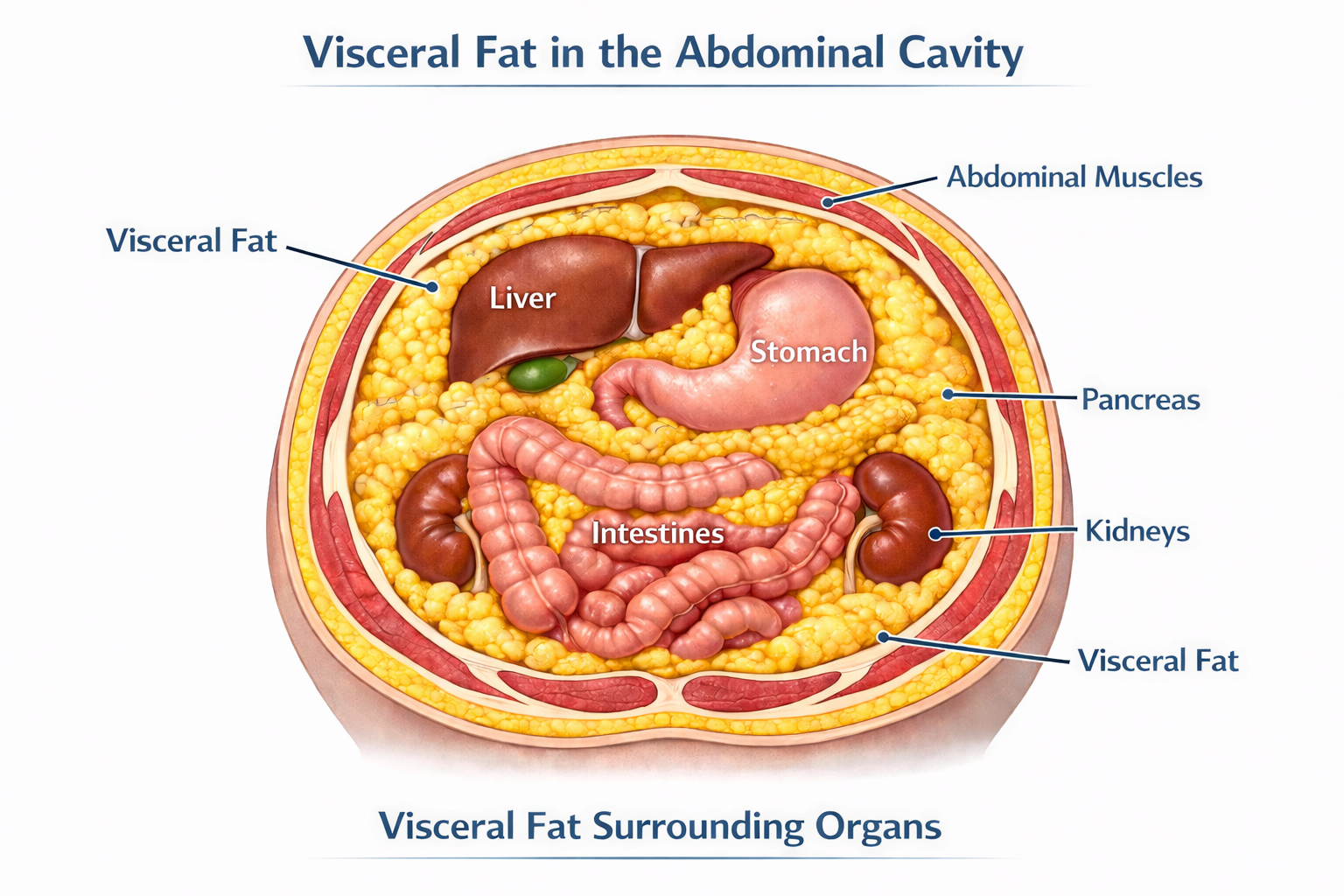
The fat you can pinch just beneath the skin is called subcutaneous fat. It's not metabolically inert, but it's relatively benign compared to the fat that accumulates deep inside the abdominal cavity — surrounding the liver, pancreas, and intestines. That's visceral fat, and it behaves very differently.

Visceral adipose tissue is biologically active. It functions, in many respects, as an endocrine organ — secreting hormones, driving inflammation, and interfering with the metabolic systems that govern energy, appetite, and hormonal balance. The technical term for these secreted compounds is adipokines, and their effects ripple throughout the body.

When visceral fat is elevated, leptin — the hormone that signals satiety — becomes dysregulated, contributing to persistent hunger even in the context of adequate intake. Adiponectin, a hormone that improves insulin sensitivity and reduces inflammation, declines. Pro-inflammatory cytokines like TNF-α and IL-6 rise, creating a state of chronic low-grade systemic inflammation that quietly drives cardiovascular risk, metabolic dysfunction, and hormonal disruption.

Visceral fat is also rich in aromatase — an enzyme that converts androgens like testosterone into estrogens. This is not a minor detail. It means that excess visceral fat doesn't just accumulate as a downstream effect of hormonal imbalance; it actively worsens that imbalance, accelerating androgen breakdown and feeding back on the very hormonal systems that keep fat distribution and metabolism healthy.

Visceral fat doesn't just respond to hormone imbalance — it creates it.

The Hormones Driving Visceral Fat Accumulation

Visceral fat and hormonal dysfunction reinforce each other. Addressing one without the other is rarely sufficient. Here's what the evidence shows for each major hormone axis:

Testosterone

Low testosterone is both a cause and a consequence of visceral fat accumulation. Testosterone promotes lean muscle mass and healthy fat distribution. As levels decline — which happens gradually in both men and women with age — fat preferentially shifts toward the abdomen. That visceral fat then accelerates testosterone breakdown through aromatization, producing more estrogen and suppressing the signaling pathway between the brain and the gonads. The result is a self-reinforcing cycle that worsens over time without intervention.

Estradiol

In women, estradiol plays an underappreciated role in metabolic health. It promotes favorable fat distribution, supports insulin sensitivity, and reduces systemic inflammation. The decline of estradiol at perimenopause and menopause is one of the primary drivers of the visceral fat accumulation many women notice in their 40s and 50s — even without meaningful changes in diet or activity level. Restoring physiologic estradiol is a legitimate metabolic intervention, not merely a quality-of-life measure.

DHEA

DHEA is the most abundant circulating steroid hormone in the body, and it declines significantly with age. Low DHEA correlates with increased visceral adiposity, reduced insulin sensitivity, and an elevated inflammatory state. It receives less attention than testosterone or estradiol in mainstream medicine, but it's a meaningful part of a comprehensive hormonal assessment.

Thyroid — Specifically Free T3

Thyroid hormone drives thermogenesis, fat oxidation, and insulin sensitivity. The clinically relevant form is Free T3 — the metabolically active fraction. Many standard workups stop at TSH, missing patients whose Free T3 is suboptimal even when TSH appears normal. When Free T3 is low, the metabolic engine slows: fat oxidation decreases, insulin resistance worsens, and visceral fat accumulates even in patients doing everything else right.

Cortisol

Visceral adipocytes have a high concentration of glucocorticoid receptors, making them exquisitely responsive to cortisol — the body's primary stress hormone. Chronic psychological or physiological stress translates directly into central fat accumulation, elevated blood glucose, and worsening insulin resistance. Cortisol dysregulation isn't optional to address in any serious approach to metabolic health.

Insulin Resistance

Insulin resistance and visceral fat are so tightly intertwined that separating cause from consequence is often impossible. Visceral fat drives insulin resistance through adipokine dysregulation, chronic inflammation, and excess free fatty acid release into the portal circulation. Insulin resistance, in turn, creates a hormonal environment that favors further visceral fat accumulation. Addressing one without the other rarely produces durable results.

What We Measure — and Why It Matters

Identifying visceral fat burden and its downstream metabolic effects requires looking beyond a scale or a BMI table. BMI, in particular, tells you almost nothing about where fat is distributed or how metabolically active it is. Two people with identical BMIs can carry dramatically different metabolic risk.

At Precision Hormone Consulting, a comprehensive assessment includes:

Waist circumference and waist-to-hip ratio are simple but meaningful starting points — far more predictive of metabolic risk than weight or BMI alone. In-office, we use InBody bioelectrical impedance analysis to go further, generating a validated estimate of visceral fat, lean mass, and body composition that gives us a quantitative baseline and a way to track changes over time. The clinical gold standards for visceral fat measurement — DEXA and MRI — offer greater precision but are expensive and largely inaccessible outside of research settings. For the purposes of clinical monitoring, our combination of anthropometric measures and InBody analysis provides a practical, actionable picture of visceral fat burden without requiring a radiology referral.

Fasting insulin and HOMA-IR — the most direct available measures of insulin resistance. A fasting glucose in the normal range can mask significantly elevated insulin levels, which is where the metabolic damage is already occurring.

Triglyceride/HDL ratio — an accessible and underutilized surrogate for insulin resistance and small, dense LDL particle burden. A standard lipid panel showing normal total cholesterol can coexist with substantial cardiovascular risk in a patient with visceral adiposity and insulin resistance.

hs-CRP — high-sensitivity C-reactive protein, used as a marker of systemic low-grade inflammation driven by visceral fat.

Adiponectin — an inverse marker of visceral fat and insulin resistance. Low levels indicate significant metabolic risk even before glucose dysregulation becomes overt on a standard chemistry panel.

SHBG (Sex Hormone Binding Globulin) — low SHBG is a reliable early signal of hepatic insulin resistance, often appearing before other markers become abnormal. It is particularly useful in women as an early warning sign of metabolic dysfunction.

LH/FSH ratio — in reproductive-age women, normal physiology produces an FSH level approximately twice that of LH. When insulin resistance is present, this ratio begins to narrow — sometimes approaching 1:1 — even before other metabolic markers are overtly abnormal. This is an early, underutilized signal of insulin's effect on the hormonal axis, and it does not require a PCOS diagnosis to be clinically meaningful.

These markers, taken together, provide a far more complete picture of metabolic health than any single value.

The PHC Approach: Treating the Root Cause

A patient came to us in their mid-forties — lean by BMI standards, active, eating well. Their complaint was persistent abdominal fullness and fatigue that had been gradually worsening for two years. Standard labs from their primary care physician had come back normal. Our panel told a different story: suboptimal Free T3, low SHBG, an elevated fasting insulin consistent with early insulin resistance, and a testosterone level that was technically within the reference range but well below what we'd expect for their age and activity level. Within four months of a targeted protocol, their body composition had shifted meaningfully and their energy had returned.

That kind of presentation is common. The tools to identify and address it are available — they just aren't part of routine care.

Hormone Optimization

Restoring physiologic hormone levels is one of the most effective metabolic interventions available. Testosterone optimization in both men and women improves lean muscle mass, reduces visceral fat, and enhances insulin signaling. Estradiol replacement — particularly relevant around perimenopause and menopause — shifts fat distribution favorably and supports metabolic function. DHEA optimization reduces inflammation and supports body composition. Ensuring Free T3 is in an optimal range, not merely a "not flagged" range, restores the metabolic rate that drives fat oxidation.

Peptide Therapy

Growth hormone-releasing peptides are a valuable adjunct for patients with significant visceral fat burden. Tesamorelin has demonstrated specific efficacy in visceral fat reduction in clinical trials. CJC-1295/Ipamorelin combinations support broader growth hormone axis optimization, improving body composition, sleep quality, and recovery.

GLP-1 Medications

For patients with significant metabolic burden or insulin resistance, GLP-1 receptor agonists represent one of the most effective pharmacologic tools currently available. Their mechanisms go well beyond appetite suppression — they improve insulin signaling, reduce hepatic fat, lower systemic inflammation, and produce meaningful, sustained reductions in visceral adiposity.

It's worth noting that GLP-1 is itself a peptide hormone produced naturally in the gut. In patients with metabolic dysfunction, endogenous GLP-1 production is often impaired — meaning these medications are, in a meaningful sense, optimizing a hormone that the body is no longer producing adequately. That framing fits squarely within a hormone optimization model rather than a weight loss drug model.

Lifestyle Integration

No clinical protocol works in isolation. Resistance training, protein-adequate nutrition, quality sleep, and deliberate stress management all independently reduce visceral adiposity and improve insulin sensitivity. Our role is to help patients optimize the full picture — not simply prescribe and monitor. Clinical intervention amplifies the results of good lifestyle fundamentals; it doesn't replace them.

If You've Been Doing the Right Things and Still Not Getting Results

The frustration of doing everything by the book and still carrying stubborn abdominal fat is real — and it usually means something in the hormonal or metabolic picture hasn't been identified yet.

Visceral fat is not a character flaw. It is a metabolic and hormonal problem, and it responds to metabolic and hormonal solutions. The evidence is clear: optimizing testosterone, estradiol, DHEA, thyroid, and metabolic markers produces real, measurable improvements in body composition and long-term health outcomes.

At Precision Hormone Consulting, we specialize in exactly this kind of comprehensive, root-cause evaluation. If you're ready to understand what's actually driving your metabolic health — and address it systematically — we'd be glad to have that conversation.

Schedule a free consultation at precisionhormoneconsulting.com, or call the clinic to book an appointment. Virtual and in-person options are both available.

[DISCLAIMER] This content is for educational purposes only and does not constitute medical advice. Hormone optimization, peptide therapy, and GLP-1 medications involve prescription therapies that require individualized evaluation, monitoring, and ongoing clinical oversight. Some therapies discussed may be used off-label. Results vary. Consult a qualified physician before beginning any new treatment protocol.

Read More