
BLOG
Physician-written perspectives on the latest research and the questions patients ask most. Start with the newest article below, or explore a topic.
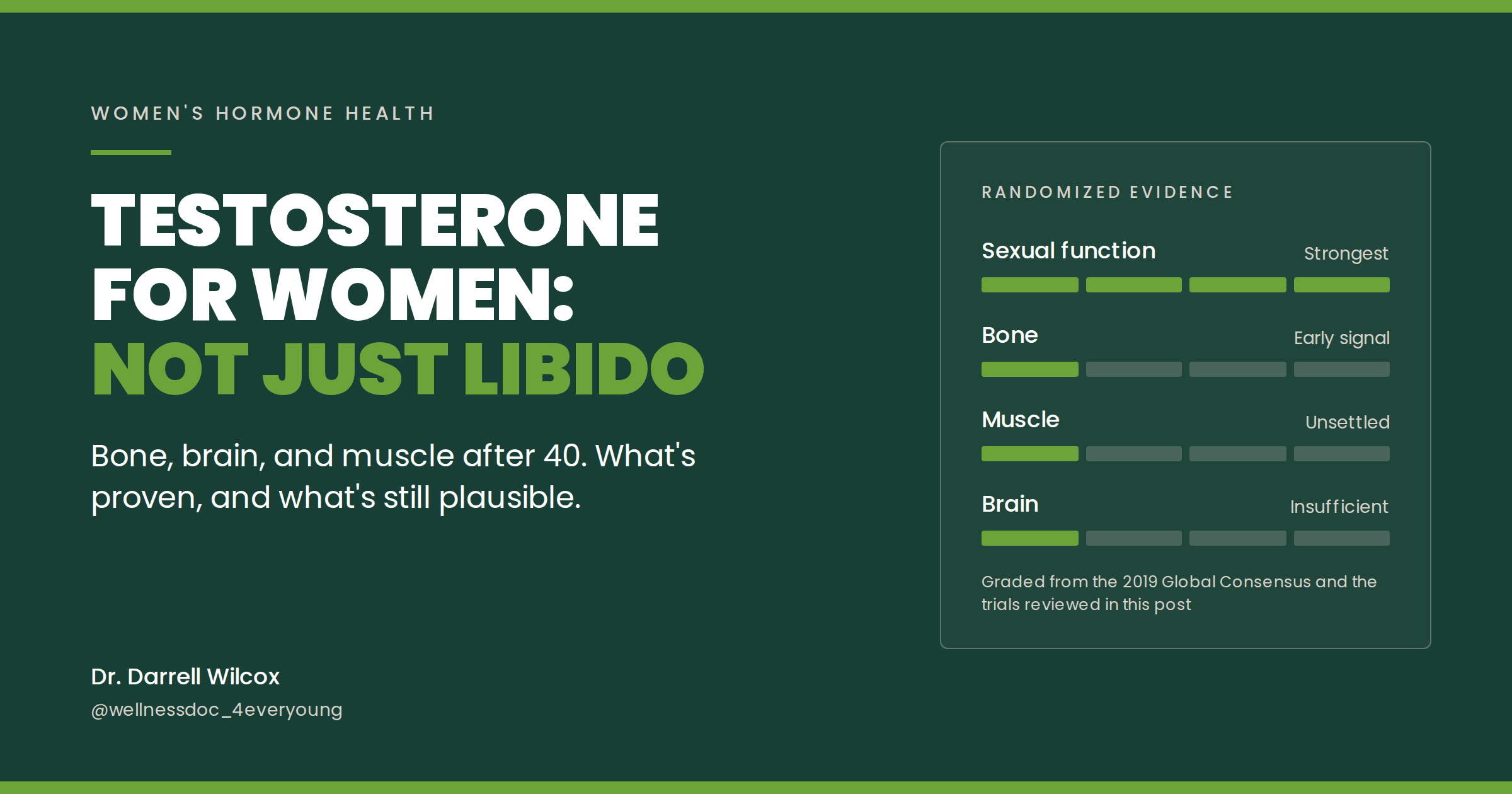
Testosterone for Women: Not Just Libido. Bone, Brain, Muscle After 40
Testosterone in women is not only a libido story. Androgen receptors sit in bone, muscle, and brain. The strongest randomized evidence is still sexual function. Bone, lean mass, and cognition remain incompletely tested.
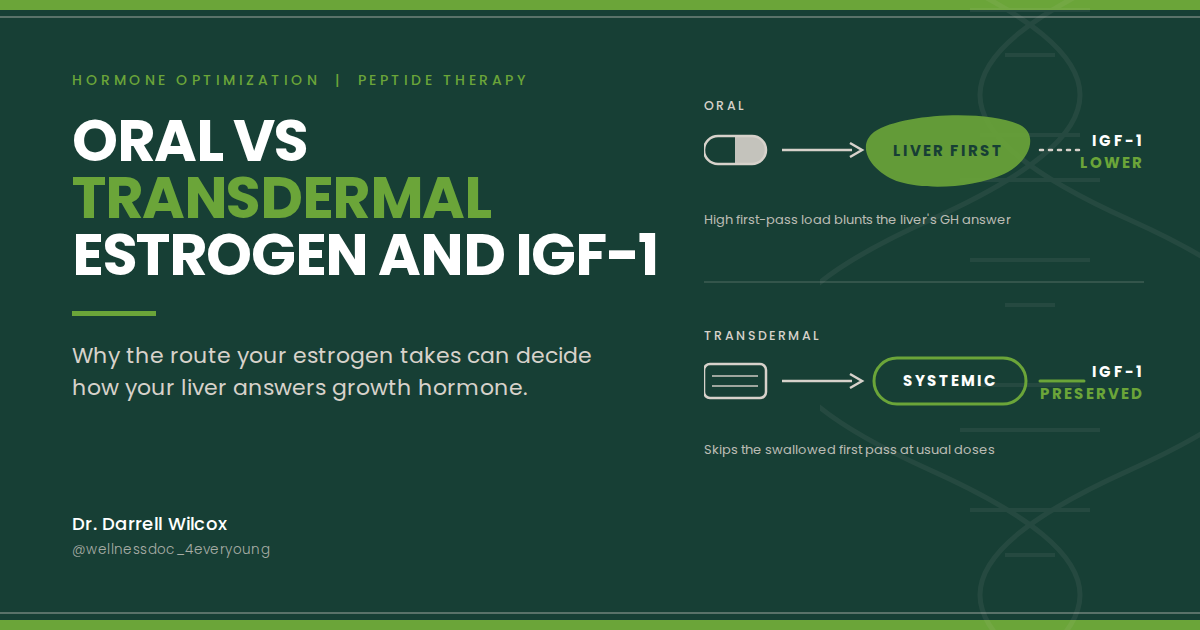
Oral vs Transdermal Estrogen and IGF-1: Why Route Determines Peptide Response
Oral estrogen and transdermal estradiol are not the same for IGF-1. First-pass through the liver helps explain why IGF-1 can stall on oral estrogen even when GH or a GH-axis peptide looks active upstream. Route is part of the foundation.
Why You're Wide Awake at 2 AM (And It's Not Stress)
If you're suddenly wide awake at 2 AM and it started sometime in your 40s, it's probably not stress. It's a specific, measurable hormone mechanism.
Does Progesterone Cause Bloating? What the Research Actually Shows
Progesterone gets blamed for bloating and breast tenderness on hormone therapy, but it actually blocks the receptor that causes fluid retention. Here's what's really going on.

Does Progesterone Cause Brain Tumors? What the Research Actually Shows
A meningioma headline about progesterone is usually actually about one specific synthetic progestin. Here's what the research shows about which ones carry real risk, and which don't.

Your Hair Is Thinning on Hormone Therapy. Testosterone Isn't Always the Reason.
More hair in the shower drain after starting hormone therapy? The dose isn't always the culprit. Here's what's actually driving it, and how to find out.

Does Estrogen Cause Blood Clots and Strokes? What the Actual Trial Data Shows
Estrogen and blood clot warnings usually skip two details that actually determine the risk: timing after menopause and route of administration. Here's what the randomized trials actually show.

Oral Estradiol and Breast Cancer Risk: What the Evidence Actually Says
Two physicians told her oral estrogen was too risky and offered nothing in its place. Neither had looked closely at which estrogen the research actually studied. Here's what the evidence shows, and why the fear doesn't hold up.